Get exclusive offers, new product updates & helpful resources straight to your inbox.
By subscribing, you agree to our Privacy Policy and consent to receive updates from our company.
Sugarcane vs PLA vs Paper Packaging: Eco Guide (2026)
Latest News & Updates
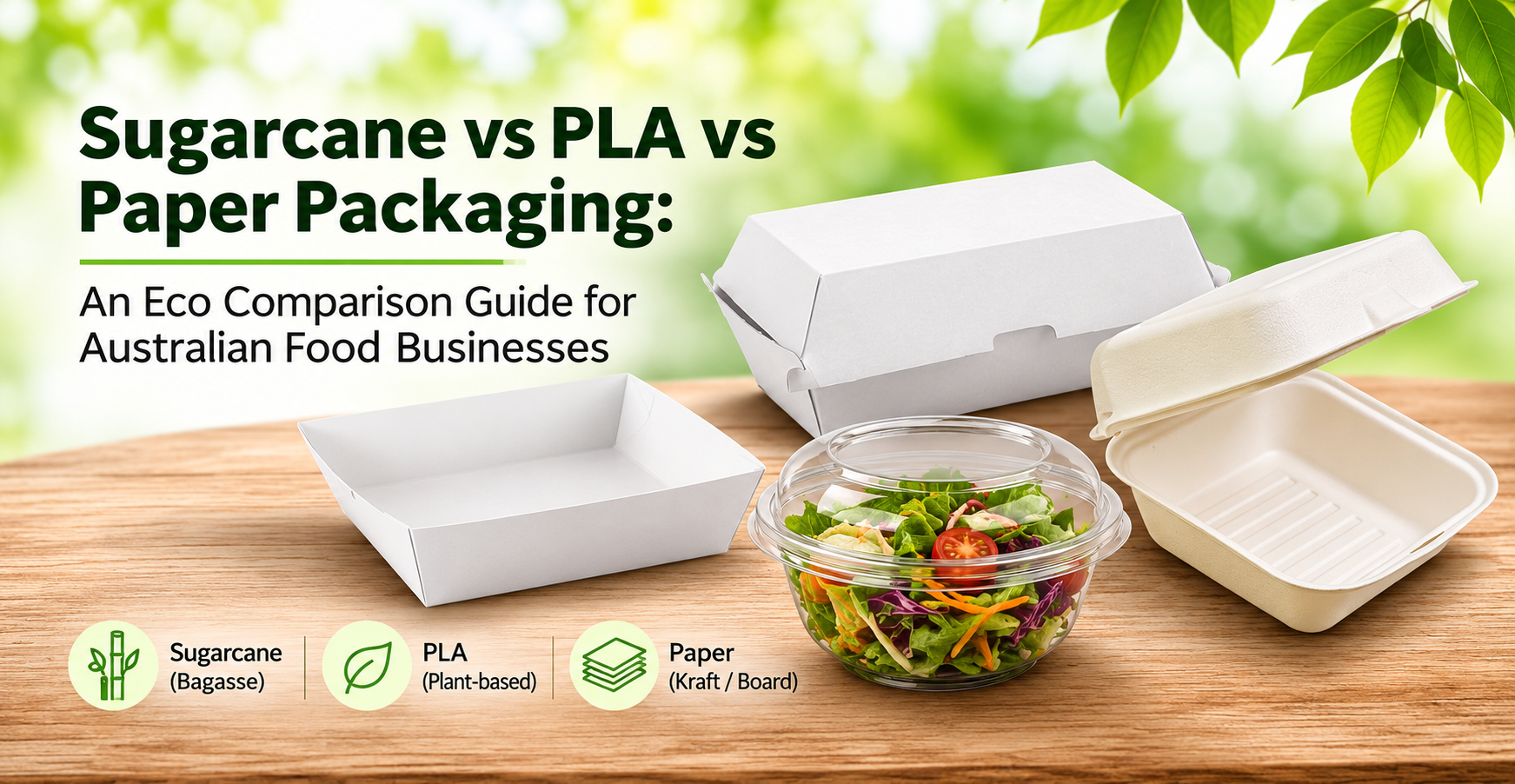
Sugarcane vs PLA vs Paper Packaging: An Eco Comparison Guide for Australian Food Businesses
12 November 2026
Sugarcane bagasse suits hot, oily and saucy food, clear PLA suits cold drinks and salads, and paper or kraft board suits dry food, bags and cups. Choose by menu item first, then check the lining and certification (AS 4736 or AS 5810). Compostable only works if a composting facility accepts it.
Replacing plastic sounds simple until you open a supplier catalogue. One item is 'compostable'. The next is 'biodegradable'. A third is 'plant-based'. They look similar and cost similar, yet they behave very differently with hot soup, iced coffee or a greasy burger.
This guide compares the three main eco materials by performance, end of life and best use, rather than by product format. You will see where each one works, where it fails, and how to match material to menu item. I have kept the trade-offs honest, because a wrong choice means warped bowls, leaking cups and compostable packaging that still ends up in landfill.
Key Takeaways
Bagasse (sugarcane fibre) is the safest default for hot, oily, saucy food, and is generally microwave safe.
Clear PLA is a cold-use material. It softens with heat, so keep it to iced drinks, salads and desserts. CPLA handles warmer use.
Paper is only as eco-friendly as its lining. A PE lining, a PLA lining and an aqueous coating lead to three different end-of-life outcomes.
AS 4736 covers commercial composting and AS 5810 covers home composting. 'Biodegradable' and 'plant-based' alone prove nothing.
Compostable packaging only delivers a benefit if it reaches a facility that accepts it. Call your waste collector before you buy.
Most menus need two or three materials, not one. Match the material to the food, then check the lid.
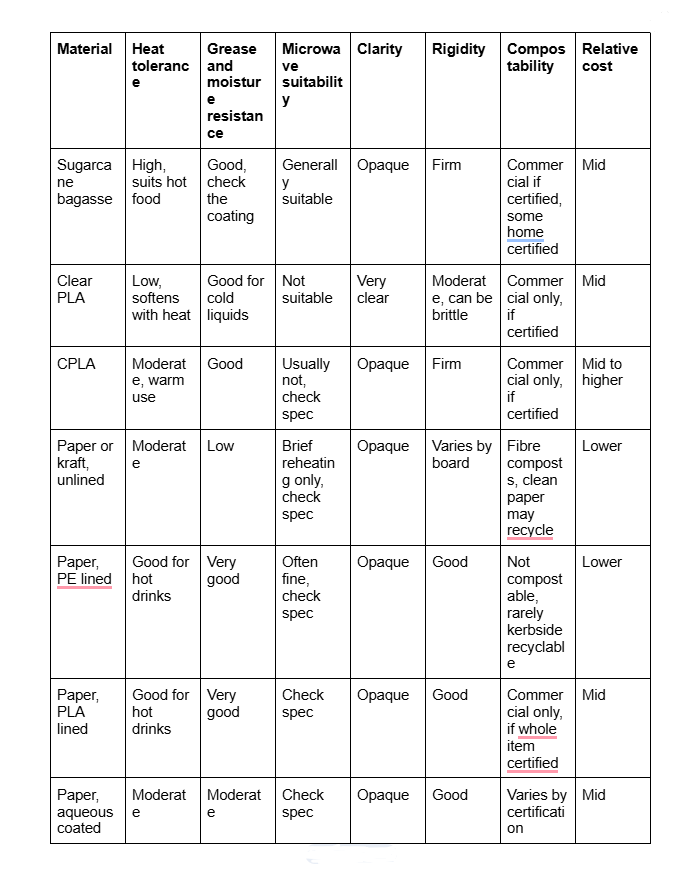
Summary Table: Sugarcane vs PLA vs Paper at a Glance
This table compares the materials qualitatively. Cost is typical and varies by supplier, volume and format. Always confirm heat ratings and certifications against the supplier's specification sheet.
What Do 'Compostable', 'Biodegradable' and 'Plant-Based' Actually Mean?
'Compostable' means something specific only when backed by certification to AS 4736 (commercial composting) or AS 5810 (home composting). 'Biodegradable' sets no time limit or conditions, so it tells you almost nothing. 'Plant-based' describes the raw material, not what happens when you throw the item away.
The Australasian Bioplastics Association (ABA) administers the seedling logo in Australia. The logo appears with a certificate number, and one version covers industrial composting while another covers home composting. If a supplier cannot give you that number, treat the claim as unproven.
Three checks save most of the confusion:
Check the whole item. A certified cup does not make the lid certified. Ask for certificates covering each component, including liners, inks and adhesives.
Check the certificate number. Match it to the exact product, not just the brand.
Avoid vague wording. Terms like 'eco', 'green' or 'degradable' with no standard behind them are a risk. The ACCC's environmental claims guidance for business says claims must be accurate and backed by evidence, and that applies to you when you repeat a supplier's claim on your menu or signage.
Oxo-degradable plastics are a separate trap. They fragment into smaller pieces rather than composting, and they do not meet the compostability standards.
Sugarcane Bagasse Packaging: Where It Performs Best
Bagasse is the fibre left after sugarcane is crushed for juice. It is moulded under heat and pressure into containers. It tolerates hot, oily and saucy food, holds its shape, and is generally microwave safe. That makes it the best all-round material for clamshells, bowls and plates.
Because bagasse is a by-product of sugar processing, it uses a material that would otherwise be burned or discarded. It does not need a separate crop grown for packaging. That is a fair, specific point in its favour, and it does not need exaggerating.
Performance in practice
Heat. Supplier specifications for bagasse typically rate it for hot food and microwave reheating, often to around boiling point or above. Treat that as a typical range and confirm against the spec sheet for the exact product.
Grease and moisture. Moulded fibre is naturally porous, so many products carry a thin barrier or additive to resist oil and liquid. Ask what it is. PFAS in some moulded fibre food packaging has drawn regulatory attention overseas, so ask suppliers for a PFAS-free declaration in writing.
Rigidity. Bagasse is firm, which suits loaded burgers, heavy rice dishes and plated catering.
Weaknesses. It is opaque, so customers cannot see the food. Steam trapped inside a sealed container can soften the walls if hot food sits for a long time. Lids are often a different material, usually PLA or a matching moulded lid, so check that the pair works together.
Best uses: clamshells, bowls, plates, trays and soup containers with lids.
A scenario: the warped bowl problem
Consider a cafe that serves pasta and curry in clear PLA bowls. Customers start to complain that the bowls warp at the rim, the lid no longer seals and the base feels soft by the time delivery drivers arrive. The fix is not a thicker PLA bowl. It is to move the hot line to bagasse bowls with matching lids, and keep clear PLA for cold salads where visibility sells the dish. This is a hypothetical, but it is the most common material mismatch I see described when operators first replace plastic.
PLA and CPLA Packaging: Clear, Cold-Friendly and Heat-Sensitive
PLA (polylactic acid) is a bioplastic made from fermented plant sugars, commonly from corn. Clear PLA looks like conventional plastic and suits cold cups, lids and salad bowls, but it softens with heat. CPLA is crystallised PLA that tolerates warmer use, such as cutlery and hot cup lids.
Clear PLA versus bagasse containers
The real difference in a bagasse vs PLA containers decision is heat and visibility. Clear PLA wins on clarity and a premium look for cold food. Bagasse wins on heat, oil and rigidity. PLA softens at relatively low temperatures. As a typical range, standard PLA starts to deform from roughly 50-60 degrees C, which is below the temperature of freshly served hot food. Bagasse is generally rated well above that. These are typical ranges only, so confirm against supplier specs.
Practical limits for clear PLA:
Do not use it for hot food, soup or anything reheated in a microwave.
Keep stock out of hot storerooms and parked delivery vehicles, where it can soften or distort.
Expect it to feel more brittle than conventional plastic when cold.
What CPLA changes
CPLA is PLA that has been crystallised, usually with fillers, which raises its heat resistance. It is typically opaque white or off-white. Suppliers often rate CPLA for warmer use than standard PLA, and it is common in cutlery and hot drink lids. It still is not a replacement for bagasse in a hot, long-hold meal container, and you should not assume microwave suitability.
PLA lined paper cups
PLA lined paper cups use a thin PLA layer on the inside of a paper cup, in place of the usual PE lining. The paper supplies strength and insulation, so hot drinks are fine. If the whole cup is certified, it may be accepted by commercial composters. It is not recyclable in kerbside recycling, and it does not suit home composting unless it is certified to AS 5810.
One caution: clear PLA looks very similar to PET plastic. If it ends up in the yellow bin, it contaminates the recycling stream. Make sure your signage and bins make the right disposal clear.
Paper and Kraft Board Packaging: The Lining Decides Everything
Paper and kraft board are fibre-based materials used for bags, boxes, cups and plates. The fibre itself can be recycled or composted, but anything holding liquid or grease needs a barrier. The lining, whether PE, PLA or aqueous, decides whether the finished item is recyclable, compostable or neither.
The three common linings
PE (polyethylene) lined. The most common and typically the lowest cost. It gives the best moisture barrier. It is generally not compostable, and most kerbside recycling does not accept PE lined cups. Dedicated cup recycling programmes exist, but they depend on collection access.
PLA lined. Compostable in commercial facilities when the whole item is certified. Not recyclable. Gives a similar barrier to PE for hot drinks.
Aqueous (water-based) coated. A thinner barrier that suits moderate grease and short hold times. Depending on the product, it may be recyclable, compostable, or both. Only certification can tell you.
Unlined kraft for dry and handheld food
Unlined kraft is excellent for bags, dry snack boxes, sandwich wraps and pastry packaging. It prints well, so it carries branding cheaply. It fails with sauces, soups or very oily food, where grease soaks through quickly.
Rigidity and format
Board weight matters. A heavy duty paper plate holds a loaded catering plate, while a light board will sag. Folded takeaway boxes and burger boxes use rigid board that stacks and ships flat, which saves storage space. For cups, ask about double-wall or ripple construction if you serve very hot drinks.
Clean paper is the easiest material to recycle. Food-soiled paper is a different matter: grease contamination makes it unsuitable for most paper recycling, so composting is the better pathway where it is accepted.
What Happens at End of Life in Australia?
Commercially compostable items break down in managed industrial facilities that run hot and controlled. Home compostable items are tested to break down in cooler backyard bins. In Australia, the practical question is not what the pack is certified for, but whether your waste collector delivers it to a facility that accepts it.
AS 4736 and AS 5810 explained
AS 4736 is the Australian Standard for biodegradable plastics suitable for composting in industrial facilities. It sets requirements for biodegradation, disintegration, heavy metals and effects on plants. AS 5810 is the equivalent standard for home composting, tested at lower temperatures, which is harder to meet. Fewer products carry the home certification.
A home compostable item is generally suitable for commercial composting as well. The reverse is not true. A commercially certified container in a backyard bin may sit there for a very long time.
Why access matters more than the logo
Many council FOGO (food organics and garden organics) services accept food scraps and garden waste but not packaging. Some processors accept certified compostable packaging, and some do not. Policies vary by council and by processor, and they change. For a cafe or caterer, the more reliable route is usually a commercial organics collector who confirms in writing which packaging they accept.
If compostable packaging goes to landfill, you pay the compostable premium and get little benefit. Buried organic material breaks down without oxygen and can produce methane. That is why I would rather you ask your collector first and buy second.
End of life by material
Bagasse: composts commercially if certified, and some products are certified for home composting. Not suited to recycling when food-soiled.
PLA and CPLA: commercial composting only, if certified. Not recyclable in kerbside systems and a contaminant if mistaken for PET.
Paper and kraft: clean, unlined paper can be recycled. Soiled paper suits composting where accepted. Lining decides everything else.
What Do State Single-Use Plastic Bans Mean for Your Material Choice?
Most Australian states and territories have banned or are phasing out single-use plastic items such as lightweight bags, straws, cutlery, stirrers, plates and bowls, and expanded polystyrene food containers. Rules and dates differ by state, and in some places the bans also cover bioplastics, so confirm with your state environment agency.
The practical point is that 'compostable plastic' is not automatically a safe harbour. In some jurisdictions, bans on items like cutlery, plates and stirrers apply to plastic-like materials labelled compostable or biodegradable, not only to conventional plastic. That can catch PLA and CPLA cutlery. Fibre-based and wooden alternatives are generally a lower-risk path for those items.
Treatment of cups, lids and containers varies between states and is being reviewed in several. Check your state's environment or EPA website, and ask your supplier to confirm compliance for your state in writing. This is general guidance, not legal advice.
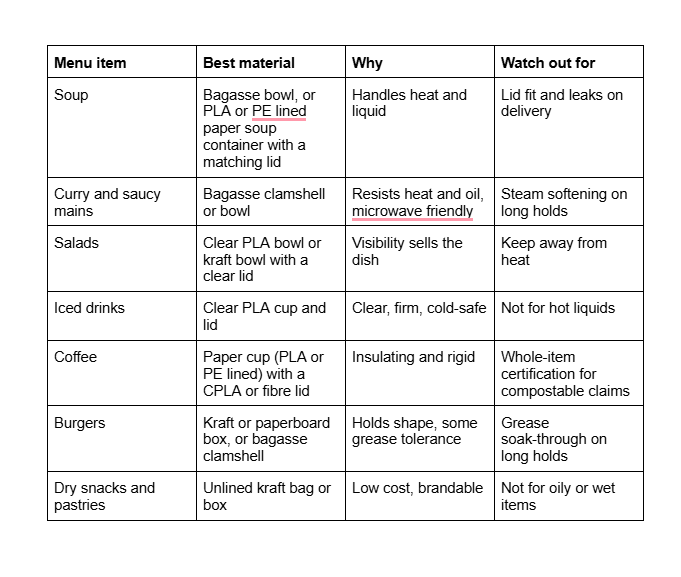
How to Match Material to Menu Item
Match by temperature, moisture and hold time. Hot, saucy food goes in bagasse, cold and clear items in PLA, and dry or handheld food in paper or kraft. Then check the lid, because the lid often fails before the container does.
Soups and curries
These are the hardest jobs. Hot liquid, oil and a sealed lid create steam and pressure. Bagasse is the default, with a matching lid tested for fit. Run a test delivery with a full container before you commit to a bulk order.
Salads and iced drinks
Clear PLA is the right choice here because it is cold, and customers like to see fresh food. Keep it away from hot pass areas and warm delivery bags.
Coffee
Hot drinks need a lined paper cup. Whether the lining is PE or PLA, and whether the lid is certified, determines whether the cup can be called compostable. Ask your supplier for certificates for both cup and lid.
Burgers and dry snacks
Kraft boxes and bags handle both well and carry branding. For very loaded, saucy burgers on long delivery runs, a bagasse clamshell holds up better.
Why 'One Material for Everything' Is the Wrong Goal
Most operators ask which material is the greenest. That is the wrong first question. The right first question is where your packaging will actually go after the customer finishes. A cafe with an organics collector and a cafe with only general waste should not buy the same packaging.
My position is that the best packaging setup is a small stack of two or three materials, each chosen for a specific menu job. Typically that means bagasse for the hot line, clear PLA for cold and visible items, and paper or kraft for dry food and drinks. Forcing one material across the menu is how you end up with warped bowls, soggy bases and customer complaints.
Before you place a bulk order, run this three-step check:
Call your waste collector. Ask what they accept, in writing. If the answer is 'general waste only', compostable packaging gives you no end-of-life benefit, and you should weigh that against the premium.
Test your worst-case item. Fill the container with your hottest, oiliest dish, seal it, and hold it for the length of a realistic delivery. The material that fails here is the wrong one for that dish.
Ask for whole-item certificates. Cup, lid, liner and cutlery each need to be certified, not just the headline product.
The contrarian part: no material beats using less. Crockery for dine-in, discounts for reusable cups and removing items customers do not need will reduce your footprint more than any swap between sugarcane, PLA and paper. Use the right material for what you must serve in single-use, but do not treat a compostable logo as a licence to use more.
How to Choose and Buy Without Overspending
Start with a small sample order, test each material against your real menu, then buy the winners in bulk. Per-unit costs generally fall as volumes rise, and standardising on fewer formats makes bulk buying easier and storage simpler.
At Food Packaging Online, you can browse the eco and compostable range by material. Relevant categories include Compostable Takeaway Containers, Paper Coffee Cups & Lids, Cold Drink, Dessert & Ice Cream Cups, Paper Containers & Takeaway Boxes, Paper Bags and Heavy Duty Paper Plates. Order samples where available, run your hot-hold and delivery tests, and check certificates before you scale up.
FAQs
Is sugarcane (bagasse) packaging better than PLA?
Neither is better across the board. Bagasse is better for hot, oily and saucy food because it handles heat and is generally microwave safe. Clear PLA is better for cold food and drinks where clarity matters. Match the material to the menu item, and check certification for each.
Are PLA lined paper cups recyclable or compostable?
PLA lined paper cups are generally not accepted in kerbside recycling. If the whole cup, including the lining, is certified to AS 4736, it may be accepted by a commercial composter. It will only be composted if your waste collector delivers it to a facility that accepts it.
What is the difference between AS 4736 and AS 5810?
AS 4736 is the Australian Standard for packaging that composts in industrial composting facilities. AS 5810 covers home composting, which runs at lower temperatures and is harder to meet. Look for the seedling logo and certificate number, and match it to your actual disposal pathway.
Is bagasse packaging microwave safe?
Bagasse is generally suitable for microwave reheating, but it varies by product, coating and lid. Many suppliers rate bagasse for hot food and reheating. Always confirm against the supplier's specification sheet, and never assume the lid is microwave safe too.
Can I put compostable packaging in my green bin?
Only if your collector or council says so. Many FOGO services accept food and garden waste but not packaging, even if it is certified. Policies vary by council and processor, so confirm in writing before directing customers or staff to use the green bin.